scroll

سبحان الله والحمد لله ولا إله إلا الله والله أكبر ولا حول ولا قوة إلا بالله العلي العظيم , വായനയുടെ ലോകത്തേക്ക് സ്വാഗതം, അറിവിന്റെ ജാലകം നിങ്ങളെ കാത്തിരിക്കുന്നു..., "try to become a person who can appreciate the help of others, a person who knows the sufferings of others to get things done, and a person who would not put money as his only goal in life"

Oct 8, 2011

Writing a Cover Letter to Control Your Message


Writing a Cover Letter to Control Your Message


Sales vice president Patricia K. is taking charge of her job search with a letter and a resume that catch the eye and tell a story.


Stop calling it a cover letter. You're missing the point. You're not covering; you're opening.
It's an introduction letter, a quick summation of what you bring to the table, and an invitation to read more details of your senior-level background and experience. And just like your resume, it needs to be focused on accomplishments and results.
Tell them what you are going to tell them
Resume"Your core message needs to be in your introduction letter," said professional resume writer Andrew Pearl, who works with TheLadders. "Like a good opening of a speech, you tell your audience what you are going to tell them. ... You boil down what a reader will see in the resume in a quick, organized way."
The whole point is to get the reader's attention by touching on key results that you’ll expand on in your resume.
"Both the intro letter and the resume need to be emphasizing what you can do for an employer," Pearl said. "And the best way to accomplish this is by reinforcing the main accomplishments as bullets in your intro letter, using an economy of language and respecting your reader."
Pearl uses four to six bullets in the intro letter with only a few paragraphs surrounding them; this formatting makes it easy for a reader to scan the page for key terms and language.
"Bullets are hooks," Pearl said. "Use them to sustain a reader, but balance them with easy-to-follow, short paragraphs."
Pearl recently rewrote the resume and cover letter of sales vice president Patricia K., who agreed the finished version caught her eye.
"I was really impressed with the intro letter Andrew wrote for me," said Patricia, who chose not to use her full name for this article. "It blew me away how strong this letter was as a way of leading in to my resume. ... The words he chose to use and the items he chose to use from my resume really stood out to me."
Patricia has risen through the ranks quickly for a senior-level salesperson. She had risen to the VP level in the past three years, and had been with the same financial company for the past eight years. Her new resume, while impressive for its accomplishments, is a one-page document.
But it grabs the reader and doesn't skirt around the issue of age.
Show some respect
"Experience is progressive," Pearl said. "It makes age secondary. If you focus on the tangible results and you are succinct about it, then you are showing the hiring manager or human-resources person who reads hundreds of resumes in a few days some respect."
"I had been with the same company for the last eight years," said Patricia, who splits living in both Birmingham, Ala., and New Orleans. "So I hadn't needed a new resume. But my old one had a format that was essentially copied from a book I found when I had finished college."


That format was the old objective-and-statement-of-qualifications format, which includes a whole lot of bullet points.
"Her old resume was littered with bullets that were not really focused on accomplishments," Pearl said. "They weren't explaining the outcome of the results, and there were too many of them. The eye couldn't breathe."
Pearl said he encourages his resume clients to control the experience of reading your resume.
"There is so much that is out of your control in a job search," Pearl said. "But you can control that intro letter and resume by being smart and focused on the decision makers reading your resume. Every bullet point matters, so use them wisely. Not all things are equal. Some people place in their resume that they have competency in Microsoft Word right after a bullet on some major accomplishment. On some level, it can be read that these bullets right next to each other are of equal value."
The new resume for Patricia is already paying dividends.
She has gotten word of two openings via friends and former co-workers to whom she gave her new resume.
The results? "I was told my resume was at the top of the list which makes me feel very confident," Patricia said. "My friend said his boss was really impressed."
With that knowledge, Patricia expects to have the interviews begin soon.
Interested in personalized resume advice? Learn more about TheLadders’ resume services on the Resume Services tab

Share/Bookmark

Oct 6, 2011

Top 50 Things To Do To Stop Global Warming

Top 50 Things To Do To Stop Global Warming


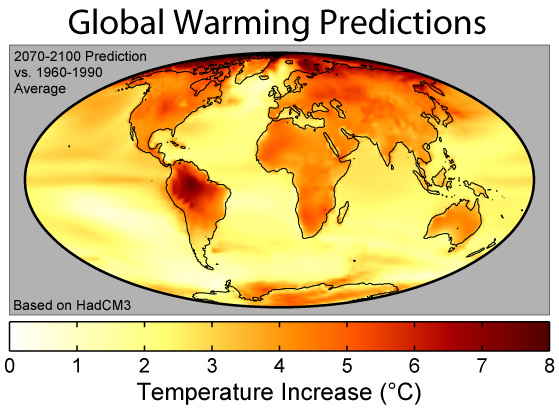
There is no doubt that the amount of carbon dioxide in the air is increasing, and there is almost universal agreement among scientists that this will have significant effects on the climate. However there are uncertainties and differences of opinion on the magnitude and timing of the effects.
Global warming is unlikely to destroy human life on Earth. But it could have very serious effects on many places where people live, flooding coastal communities and cities, and have devastating effects on food and water supplies. The disruption could lead to wars, poverty, disease, and nowhere to live for huge numbers of people. We are already beginning to see significant changes due to global warming.

The big question is whether we can act quickly and decisively enough to minimise the effects, or whether people will just look after their own short-term interests and problems so that the worst effects of global warming are allowed to happen


Global Warming is a dramatically urgent and serious problem. We don't need to wait for governments to find a solution for this problem: each individual can bring an important help adopting a more responsible lifestyle: starting from little, everyday things. It's the only reasonable way to save our planet, before it is too late. Here is a list of 50 simple things that everyone can do in order to fight against and reduce the Global Warming phenomenon: some of these ideas are at no cost, some other require a little effort or investment but can help you save a lot of money, in the middle long term!

Top 50 Things To Do To Stop Global Warming
You can find more at:http://globalwarming-facts.info/

1. Replace a regular incandescent light bulb with a compact fluorescent light bulb (cfl)
CFLs use 60% less energy than a regular bulb. This simple switch will save about 300
pounds of carbon dioxide a year.
2. Install a programmable thermostat Programmable thermostats will automatically lower the heat or air conditioning at night and raise them again in the morning. They can save you $100 a year on your energy bill.
3. Move your thermostat down 2° in winter and up 2° in summer. Almost half of the energy we use in our homes goes to heating and cooling. You could save about 2,000 pounds of carbon dioxide a year with this simpl adjustment.
Global warming cartoon4. Clean or replace filters on your furnace and air conditioner Cleaning a dirty air filter can save 350 pounds of carbon dioxide a year.
5. Choose energy efficient appliances when making new purchases
Look for the Energy Star label on new appliances to choose the most energy
efficient products available.
6. Do not leave appliances on standby
Use the "on/off" function on the machine itself. A TV set that's switched on for 3 ours a day (the average time Europeans spend watching TV) and in standby mode during the remaining 21 hours uses about 40% of its energy in standby mode.
7. Wrap your water heater in an insulation blanket
You’ll save 1,000 pounds of carbon dioxide a year with this simple action. You can ave another 550 pounds per year by setting the thermostat no higher than 50°C.
8. Move your fridge and freezer
Placing them next to the cooker or boiler consumes much more energy than if they ere standing on their own. For example, if you put them in a hot cellar room where the room temperature is 30-35ºC, energy use is almost double and causes an extra 160kg of CO2 emissions for fridges per year and 320kg for freezers.
9. Defrost old fridges and freezers regularly
Even better is to replace them with newer models, which all have automatic defrost cycles and are generally up to two times more energy-efficient than their predecessors.
10. Don't let heat escape from your house over a long period
When airing your house, open the windows for only a few minutes. If you leave a small opening all day long, the energy needed to keep it warm inside during six cold months (10ºC or less outside temperature) would result in almost 1 ton of CO2 emissions.
11. Replace your old single-glazed windows with double-glazing
This requires a bit of upfront investment, but will halve the energy lost through windows and pay off in the long term. If you go for the best the market has to offer 3 (wooden-framed double-glazed units with low-emission glass and filled with argon gas), you can even save more than 70% of the energy lost.
12. Get a home energy audit
Many utilities offer free home energy audits to find where your home is poorly insulated or energy inefficient. You can save up to 30% off your energy bill and 1,000 pounds of carbon dioxide a year. Energy Star can help you find an energy specialist.
13. Cover your pots while cooking
Doing so can save a lot of the energy needed for preparing the dish. Even better are pressure cookers and steamers: they can save around 70%!
14. Use the washing machine or dishwasher only when they are full
If you need to use it when it is half full, then use the half-load or economy setting. There is also no need to set the temperatures high. Nowadays detergents are so efficient that they get your clothes and dishes clean at low temperatures.
15. Take a shower instead of a bath
A shower takes up to four times less energy than a bath. To maximise the energy saving, avoid power showers and use low-flow showerheads, which are cheap and provide the same comfort.
16. Use less hot water
It takes a lot of energy to heat water. You can use less hot water by installing a low flow shower head (350 pounds of carbon dioxide saved per year) and washing your clothes in cold or warm water (500 pounds saved per year) instead of hot.
17. Use a clothesline instead of a dryer whenever possible
You can save 700 pounds of carbon dioxide when you air dry your clothes for 6 months out of the year.
18. Insulate and weatherize your home
Properly insulating your walls and ceilings can save 25% of your home heating bill and 2,000 pounds of carbon dioxide a year. Caulking and weather-stripping can save another 1,700 pounds per year. Energy Efficient has more information on how to better insulate your home.
19. Be sure you’re recycling at home
You can save 2,400 pounds of carbon dioxide a year by recycling half of the waste your household generates.
20. Recycle your organic waste
Around 3% of the greenhouse gas emissions through the methane is released by decomposing bio-degradable waste. By recycling organic waste or composting it if you have a garden, you can help eliminate this problem! Just make sure that you compost it properly, so it decomposes with sufficient oxygen, otherwise your compost will cause methane emissions and smell foul.
21. Buy intelligently
One bottle of 1.5l requires less energy and produces less waste than three bottles of 0.5l. As well, buy recycled paper products: it takes less 70 to 90% less energy to make recycled paper and it prevents the loss of forests worldwide.
22. Choose products that come with little packaging and buy refills when you canYou will also cut down on waste production and energy use... another help against global warming.
23. Reuse your shopping bag
When shopping, it saves energy and waste to use a reusable bag instead of accepting a disposable one in each shop. Waste not only discharges CO2 and methane into the atmosphere, it can also pollute the air, groundwater and soil.
24. Reduce waste
Most products we buy cause greenhouse gas emissions in one or another way, e.g. during production and distribution. By taking your lunch in a reusable lunch box instead of a disposable one, you save the energy needed to produce new lunch boxes.
25. Plant a tree
A single tree will absorb one ton of carbon dioxide over its lifetime. Shade provided by trees can also reduce your air conditioning bill by 10 to 15%. The Arbor Day Foundation has information on planting and provides trees you can plant with membership.
26. Switch to green powerIn many areas, you can switch to energy generated by clean, renewable sources such as wind and solar. In some of these, you can even get refunds by government if you choose to switch to a clean energy producer, and you can also earn money by selling the energy you produce and don't use for yourself.
27. Buy locally grown and produced foods
The average meal in the United States travels 1,200 miles from the farm to your plate. Buying locally will save fuel and keep money in your community.
28. Buy fresh foods instead of frozen
Frozen food uses 10 times more energy to produce.
29. Seek out and support local farmers markets
They reduce the amount of energy required to grow and transport the food to you by one fifth. Seek farmer’s markets in your area, and go for them.
30. Buy organic foods as much as possible
Organic soils capture and store carbon dioxide at much higher levels than soils from conventional farms. If we grew all of our corn and soybeans organically, we’d remove 580 billion pounds of carbon dioxide from the atmosphere!
31. Eat less meat
Methane is the second most significant greenhouse gas and cows are one of the greatest methane emitters. Their grassy diet and multiple stomachs cause them to produce methane, which they exhale with every breath.
32. Reduce the number of miles you drive by walking, biking, carpooling or taking mass transit wherever possible Avoiding just 10 miles of driving every week would eliminate about 500 pounds of carbon dioxide emissions a year! Look for transit options in your area.
33. Start a carpool with your coworkers or classmates
Sharing a ride with someone just 2 days a week will reduce your carbon dioxide emissions by 1,590 pounds a year. eRideShare.com runs a free service connecting north american commuters and travelers.
34. Don't leave an empty roof rack on your car
This can increase fuel consumption and CO2 emissions by up to 10% due to wind resistance and the extra weight - removing it is a better idea.
35. Keep your car tuned up
Regular maintenance helps improve fuel efficiency and reduces emissions. When just 1% of car owners properly maintain their cars, nearly a billion pounds of carbon dioxide are kept out of the atmosphere.
36. Drive carefully and do not waste fuel
You can reduce CO2 emissions by readjusting your driving style. Choose proper gears, do not abuse the gas pedal, use the engine brake instead of the pedal brake when possible and turn off your engine when your vehicle is motionless for more than one minute. By readjusting your driving style you can save money on both fuel and car mantainance.
37. Check your tires weekly to make sure they’re properly inflated
Proper tire inflation can improve gas mileage by more than 3%. Since every gallon of gasoline saved keeps 20 pounds of carbon dioxide out of the atmosphere, every increase in fuel efficiency makes a difference!
38. When it is time for a new car, choose a more fuel efficient vehicle
You can save 3,000 pounds of carbon dioxide every year if your new car gets only 3 miles per gallon more than your current one. You can get up to 60 miles per gallon with a hybrid! You can find information on fuel efficiency on FuelEconomy and on GreenCars websites.
39. Try car sharing
Need a car but don’t want to buy one? Community car sharing organizations provide access to a car and your membership fee covers gas, maintenance and insurance. Many companies – such as Flexcar - offer low emission or hybrid cars too! Also, see ZipCar.
40. Try telecommuting from home
Telecommuting can help you drastically reduce the number of miles you drive every week. For more information, check out the Telework Coalition.

41. Fly less
Air travel produces large amounts of emissions so reducing how much you fly by even one or two trips a year can reduce your emissions significantly. You can also offset your air travel carbon emissions by investingin renewable energy projects.
42. Encourage your school or business to reduce emissions
You can extend your positive influence on global warming well beyond your home by actively encouraging other to take action.

43. Join the virtual march
The Stop Global Warming Virtual March is a non-political effort to bring people concerned about global warming together in one place. Add your voice to the hundreds of thousands of other people urging action on this issue.
44. Encourage the switch to renewable energySuccessfully combating global warming requires a national transition to renewable energy sources such as solar, wind and biomass. These technologies are ready to be deployed more widely but there are regulatory barriers impeding them. U.S. citizens, take action to break down those barriers with Vote Solar.
45. Protect and conserve forest worldwide
Forests play a critial role in global warming: they store carbon. When forests are burned or cut down, their stored carbon is release into the atmosphere - deforestation now accounts for about 20% of carbon dioxide emissions each year. Conservation International has more information on saving forests from global warming.
46. Consider the impact of your investments
If you invest your money, you should consider the impact that your investments and savings will have on global warming. Check out SocialInvest and Ceres to can learn more about how to ensure your money is being invested in companies, products and projects that address issues related to climate change.
47. Make your city cool
Cities and states around the country have taken action to stop global warming by passing innovative transportation and energy saving legislation. If you're in the U.S., join the cool cities list.

48. Tell Congress to act
The McCain Lieberman Climate Stewardship and Innovation Act would set a firm limit on carbon dioxide emissions and then use free market incentives to lower costs, promote efficiency and spur innovation. Tell your representative to support it.
49. Make sure your voice is heard!
Americans must have a stronger commitment from their government in order to stop global warming and implement solutions and such a commitment won’t come without a dramatic increase in citizen lobbying for new laws with teeth. Get the facts about U.S. politicians and candidates at Project Vote Smart and The League of Conservation Voters. Make sure your voice is heard by voting!
50. Share this list!Send this page via e-mail to your friends! Spread this list worldwide and help people
doing their part: the more people you will manage to enlighten, the greater YOUR
help to save the planet will be (but please take action on first person too)!
Global Warming
Original source: http://globalwarming-facts.info/50-tips.html


Share/Bookmark

Oct 4, 2011

Bottled Water vs. Tap Water: Which is really safer?


Bottled Water vs. Tap Water: Which is really safer?

Do you drink bottled water because you believe it to be safer and healthier than tap water? 
In our efforts to make informed decisions and take responsibility for our own health and well-being, it makes sense to take a hard look at one of our most basic health needs — safe drinking water.
While tap water is regulated by the Environmental Protection Agency and state and local governments, bottled water is the responsibility of the Food and Drug Administration, and according to the non-profit consumer organization, FoodandWaterWatch.org:
40 percent of bottled water originates from the tap, with added minerals or filtration
Municipal water is not permitted to contain E. coli or fecal coliform bacteria. FDA rules for bottled water include no such prohibitions.
Municipal water from surface sources must be filtered and disinfected, or it must have strict pollution controls. There are no filtration or disinfection requirements for bottled water at the federal level. The only source-water protection, filtration or disinfection provisions for bottled water are delegated to the states.
Cities must have their water tested by government-certified labs. No certification requirement exists for bottlers. 
Municipal tap water must be tested for coliform bacteria 100 or more times per month. Bottled water plants only have to test once a week.
In a June 9, 2009 report to Congress, the Government Accountability Office, stated:
FDA and state bottled water labeling requirements are similar to labeling requirements for other foods, but the information provided to consumers is less than what EPA requires of public water systems under the Safe Drinking Water Act. Like other foods, bottled water labels must list ingredients and nutritional information and are subject to the same prohibitions against misbranding. 
In 2000, FDA concluded that it was feasible for the bottled water industry to provide the same types of information to consumers that public water systems must provide. The agency was not required to conduct rulemaking to require that manufacturers provide such information to consumers, however, and it has not done so. 
Nevertheless, GAO’s work suggests that consumers may benefit from such additional information. For example, when GAO asked cognizant officials in a survey of the 50 states and the District of Columbia, whether their consumers had misconceptions about bottled water, many replied that consumers often believe that bottled water is safer or healthier than tap water. GAO found that information comparable to what public water systems are required to provide to consumers of tap water was available for only a small percentage of the 83 bottled water labels it reviewed, companies it contacted, or company Web sites it reviewed.
Above and beyond the health issue, bottled water comes at a much higher price than does tap water, both economically and environmentally. That’s two strikes against bottled water. So is it really safer than tap water?


Read more: http://www.care2.com/causes/bottled-water-vs-tap-water-which-is-really-safer.html#ixzz1ZXen1i4V

Share/Bookmark

Oct 3, 2011

Tap Water Is Cleaner Than Bottled Water (And Other Shocking Facts)


Tap Water Is Cleaner Than Bottled Water (And Other Shocking Facts) 

Tap Water Is Cleaner Than Bottled Water (And Other Shocking Facts)


Today, as I stood in line at the grocery store, watching the woman in front of me haul a huge case of bottled water up to the conveyor belt, I felt that familiar twinge…a combination of frustration and confusion.
All I could think about was those 24 unnecessary bottles ending up in the landfill. And the unnecessary oil it took to make the bottles. And the unnecessary mess that was made while extracting the oil.
“Why, why, WHY?” I wondered. Why would you pay for bottled water every week when perfectly good water flows out of every faucet in your house?!
And then it dawned on me. The answer was right there on the packaging. “Purified water.” One of the biggest reasons people buy and drink bottled water is because they think it’s cleaner than tap water.
But 40 percent of all bottled water in the U.S. is actually taken from municipal water sources. Bottled water companies are literally bottling up the same water that comes out of your faucet, jacking up the price and laughing all the way to the bank.
Also disturbing is the fact that far less testing is done on bottled water than on tap water. It turns out that unlike tap water, bottled water isn’t tested for e. coli. And it can be distributed even if it doesn’t meet the quality standards of tap water. Unlike tap water, bottled water isn’t required to produce quality reports or even provide its source.


Feeling that anger and confusion yet? Scroll on to learn more.
The Facts About Bottled Water


Share/Bookmark

Oct 2, 2011

Taking Notes in the Job Interview


Taking Notes in the Job Interview


Notes have a place in the job interview, but cheat sheets are unacceptable.


Job interviews are all about exchanging information − information about the job, information about yourself, information about your past and your industry expertise. At times, a job interview can feel like an examination. Better study.
There’s also a lot to take in during a job interview. More to study.
Since our school days we’ve been trained to take notes, to study them and refer to them in our discourse. It’s the best way to acquire and retain critical information. You might be inclined to take notes during a job interview. You might be inclined to refer to your previous notes when answering questions.
But is it appropriate? How does it look when a job seeker sits down for an interview and opens a notebook or sheets of data?
The answer, according to interview experts, is clear: taking notes is acceptable, even encouraged; referring to your notes when answering questions is unacceptable.
“If you're jotting down people’s names and positions, then absolutely it’s OK,” said Nancy L. Newell, a senior professional in human resources and the principal of Nth Degree Consulting, a human resource management and executive coaching company. She advises job seekers to bring a pad folio to an interview and stock it full of copies of your resume and work samples that can be shown or given out to everyone you meet during the interview. “I don’t think people show up to an interview empty-handed.”
The padfolio can also be used to jot down notes to capture key nuggets of information during the interview – the ones you really don’t want to forget or get embarrassingly mixed up in the future. You don’t want to find yourself a week later at the second interview referring to the wrong competitor in a strategic campaign or calling the president of the company by the wrong name. But don’t be overzealous, Newell warned. It’s still a conversation and you don’t want to appear like a reporter conducting an interview.
One trick Newell recommends is to collect business cards of all the key people you meet that day and categorize them within your pad folio. That way you’ll be well-organized after the interview and poised for an effective follow-up campaign.

Cheat Sheets

With so much on your mind, it’s easy to forget something during an interview. There might be a bright idea you wanted to bring up or a key selling point you can’t afford to skip. The temptation here is to rely on your notes – after all, notes are OK if you’re giving a speech, right? Wrong, said Newell. “Even if it’s just a quick glance, that’s a move that’s very ill-advised because it’s all up to the perception of the interviewer.”

The interviews are all about exchanging information, and above all it’s absolutely crucial to convey a simple message: I am an expert, I am good at this and I’m the right person for the job.
“The point is to appear competent, and a great way to do that is to appear as if you know what you’re doing.” Relying on notes, however subtle, demonstrates the opposite message: I have no idea what I’m doing here and can’t even remember what I’m supposed to say. “The possible downside consequences are so much greater than any possible upside.”
One concern of interviewers is that the notes and thus the statements aren’t your own, said Newell. “Who prepared the notes? Is that his knowledge or somebody else’s knowledge that they’re bringing in?
The best course is to prepare, to study, to know the facts cold before you enter the interview. Take notes about the company during the course of the interview and while you’re studying, figure out what you want to say to present yourself as the right person for the job, write it down and rehearse. Then if you forget something important, either roll with it or bring up the point during the follow-up correspondence.
Andrew Klappholz is a general assignment reporter for TheLadders.

Share/Bookmark

Oct 1, 2011

Bahraini Doctors: 15 Year Prison Terms For Treating Protesters


Bahraini Doctors: 15 Year Prison Terms For Treating Protesters


A special tribunal has sentenced 13 Bahraini doctors and nurses who treated anti-government protesters to 15 year prison terms for crimes against the state. Seven medical workers at the Salmaniya Medical Complex, Bahrain’s largest public hospital, were given sentences of 5 to 10 years. Human rights groups immediately condemned the sentences. Said Hans Hogrefe, the chief policy officer of Physicians for Human Rights, an advocacy group in Cambridge, Massachusetts, in a statement:
“These are medical professionals who were treating patients during a period of civil unrest, as their ethical duty requires them to do. To imprison them as part of a political struggle is unconscionable.”
The doctors and other medical personnel are accused of “forcefully occupying Salmaniya Medical Centre… possessing unlicensed arms (AK-47s) and knives, incitement to overthrow the regime, seizing medical equipment, detaining policemen, and spreading false news.” They are also accused of acts with a “terrorist aim” including “inciting hatred to the regime and insulting it” and “destroying public property.” A special tribunal of military prosecutors and both civilian and military judges issued the sentences.
The doctors have denied all the charges, asserting that they were doing their duty as medical professionals and arguing that the government has pressed the charges to punish them for treating protesters:
“There was no sense of rebellion,” Robert Fisk, senior Middle East correspondent for The Independent, who was in Bahrain during the March unrest, told Al Jazeera.
“It was a professional sense of, ‘how do we treat so many people who have been shot and wounded in a short period of time?’”
The daughter of one of the charged medics told Al Jazeera that none of the doctors or nurses attended Thursday’s hearing.
“These cruel sentences present a serious breach of law and is considered to be an attack on the medical profession,” she said in a statement.
Matar Matar, a former opposition MP in Bahrain, condemned the sentences, saying that “a big portion of Bahrainis are insisting to have political reforms” and that the regime is ignoring a major “political problem.”
In a separate case, the same court has sentenced one protester to death and another to life in prison for running down a police officer with a car in Sitra, an oil hub south of Bahrain’s capital of Manama and home to an activist Shiite population. On Wednesday, the security court upheld life sentences for eight prominent political activists and sentenced at least 32 people, including at least two members of the Bahrain national handball team, to 15 year prison terms for illegally protesting.
Mohammed al-Maskati, head of the Bahrain Youth Society for Human Rights, said that the government of Bahrain is “using the law for repression” and “sending a very negative message to the international community that Bahrain is not moving in the right direction in terms of respecting human rights.”
At least 34 people were killed in the protests in Bahrain that were inspired by the uprisings in Tunisia and Egypt. More than 1,400 have been arrested and as many as 3,600 people fired from their jobs. Bahrain, a country of some 525,000, is a US ally and houses the the US Navy’s fifth fleet why is the US not taking a stronger stance against Bahrain’s government for abusing the rights of its citizens, including doctors and nurses who were doing their duty by treating the injured?


Read more: http://www.care2.com/causes/bahraini-doctors-15-year-prison-terms-for-treating-protesters.html#ixzz1ZXgUNKRA

Share/Bookmark